How to Tell Clients They Are Talking to an Assistant, Without Making It Awkward
A client messages your studio at ten at night to ask about a Saturday slot. The reply comes within a minute. She is delighted, until she realises halfway through that she has been chatting with an assistant. The service was fine. What stung was not being told.
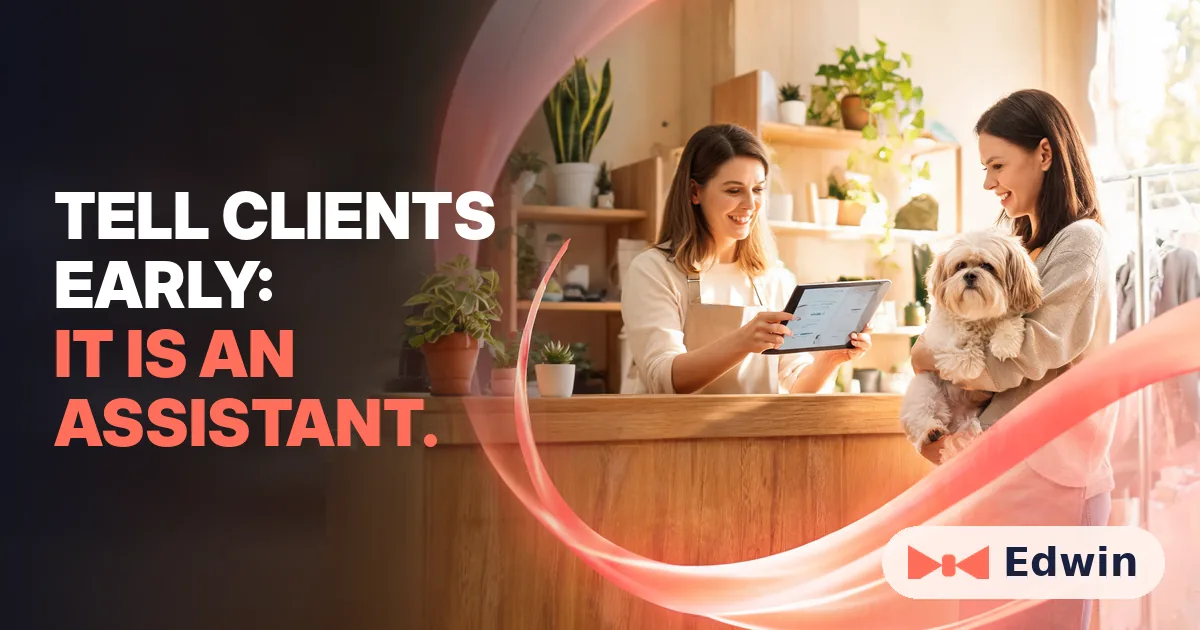
If you use an assistant with your clients, telling them is both kind and sensible. It does not need to be awkward. Here are three habits that keep it light.
Say it in the first message
The first line is the right place, not the footer. People are comfortable with the idea once they know it from the start. They are not comfortable with finding out later.
Hello, this is Edwin, the digital assistant for Harbour Paws. I can check the diary and prepare a quote, and Sam will review everything before it is confirmed.
Say what it can do and what it cannot
A short description removes most of the doubt. "I can check availability and prepare a quote" is clear. "I cannot decide on a price for something unusual, but I will pass it to Sam" is also clear. Clients do not mind the limits when they know them.
Always leave a human route
Some people simply prefer to talk to a person, and that is fine. Make the way out obvious: "If you would rather speak to Sam, say so and I will pass your message on." The goal is that nobody feels trapped in a conversation.
Small touches that help
- Use the same name and tone each time, so the assistant feels like part of your business.
- Do not give the assistant a human name or pretend it is you.
- Check what it says before it goes out, especially in the first weeks. Adjust the wording to sound like you.
That is how Edwin, a digital assistant, is designed to work. He always says he is an AI, he passes the conversation to you when he does not know, and nothing important happens without your approval.